
EU App Payments After 1 October 2026: How to Compare Checkout Options
Compare EU App Store checkout options using the applicable Apple terms, payment costs, customer experience and operating responsibilities before changing a subscription app’s payment flow.
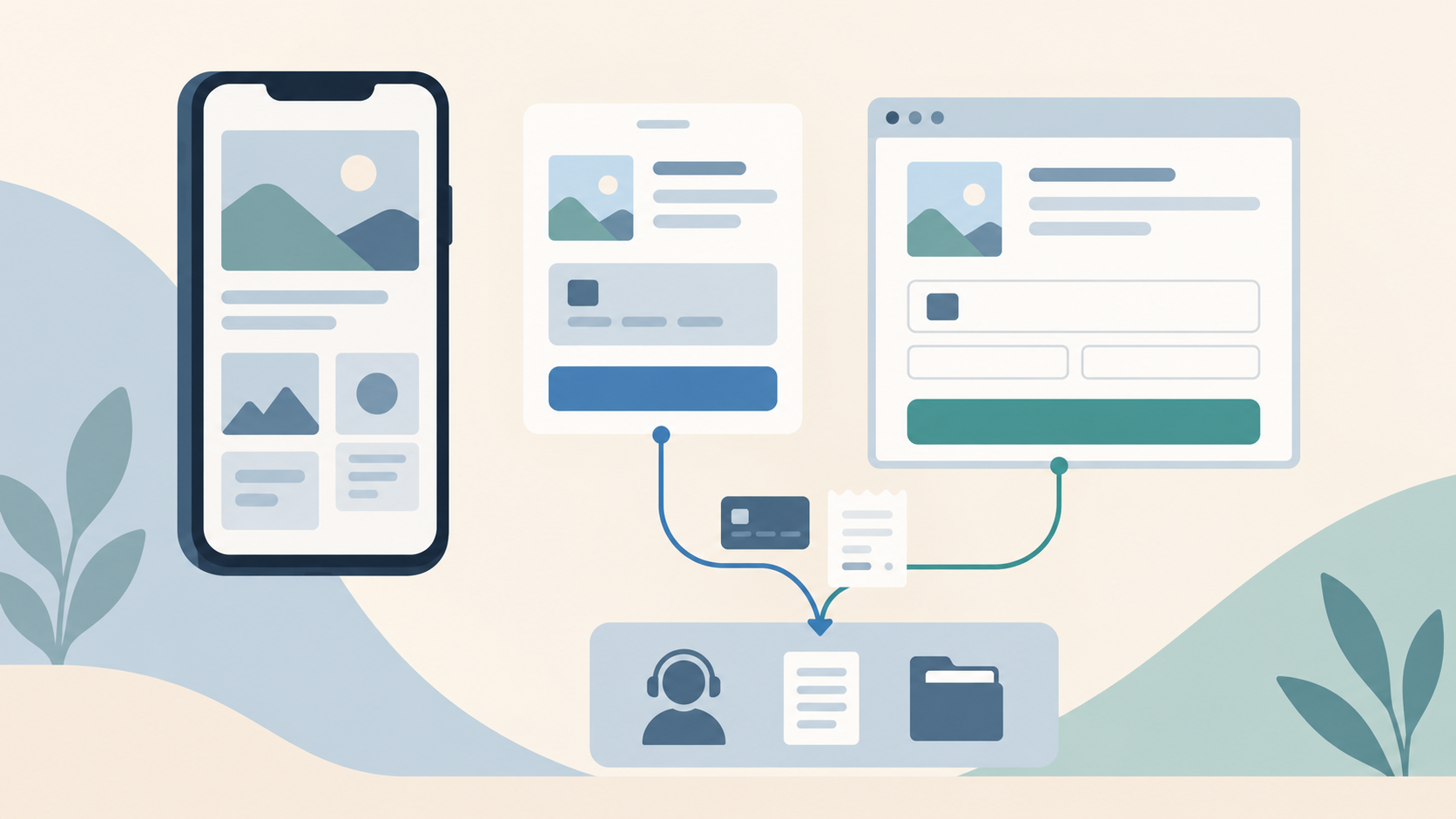
Apple’s EU App Store payment changes give subscription-app businesses more checkout combinations to consider from 1 October 2026. The useful decision is whether an eligible combination improves the business after payment costs, purchase completion and continuing operating work. Keeping Apple In-App Purchase can be the right result. An alternative deserves further work when the expected benefit survives those costs and the team can support it.
For an app founder or product director, that means reviewing the app’s accepted agreement and building a comparison around its own EU sales. A headline commission difference gives only part of the answer.
Which checkout options can you combine?
Apple’s EU overview describes three routes for digital goods and services sold through an EU App Store app: Apple In-App Purchase, alternative payment processing within the app, and out-of-app offers. Eligible options can coexist. This comparison concerns checkout in App Store apps; distribution through other channels has separate economics.
- Apple In-App Purchase: Apple provides payment processing, tax support and customer service within its purchase system. Retaining it keeps those functions within the existing Apple purchase relationship.
- Alternative processing within the app: the purchase stays inside the app, while another processor handles payment. The business takes responsibility for the associated billing integration and customer support.
- Out-of-app offers: customers are directed to purchase at another destination, such as a website. Offers can use actionable links or communicate an offer without one. Their contractual treatment differs.
Check eligibility before designing the flow. Apple requires the relevant entitlement for alternative processing and out-of-app offers, including offers without actionable links. Its payment-options documentation explains implementation and presentation requirements. When IAP is combined with other payment options, Apple requires IAP to appear at least as prominently wherever those options are shown for the purchase.
Age and category also matter. Under the agreement, apps in the Kids category cannot provide out-of-app offers, and alternative in-app purchases require a parental gate. Out-of-app offers are prohibited for users below the applicable age threshold; alternative in-app purchases require a parental gate. For older minors, both routes require a parental gate. Apple describes these groups as under 13 and ages 13–17, with higher parental-consent thresholds applying in some storefronts. Confirm the rules for the app’s audience and storefronts.
Compare the money and the customer journey together
Start with the applicable Apple charges for each eligible route, using the current terms for your program, transactions and subscription cohorts. Then include the payment provider, billing tools, currency conversion, refunds and chargebacks. Alternative checkout can still attract Apple charges, so external payment should never be entered into the model as automatically fee-free.
Use a consistent period and customer population. Separate new subscriptions from renewals and existing cohorts where the applicable treatment differs. Include development and launch costs, then the continuing cost of maintaining payment integrations, reconciling transactions and supporting customers.
Next, vary purchase completion and renewal assumptions. A route that leaves more revenue from each completed purchase can produce less overall if enough customers abandon checkout or fail to renew. Compare plausible lower, expected and higher completion outcomes against the current flow. Record which assumptions come from observed app data and which still need evidence.
RevenueCat’s 7 October analysis offers practitioner context on these conversion and operating trade-offs. RevenueCat sells subscription-billing services, and its scenarios are illustrations. They provide questions to investigate, rather than evidence of results for your app.
Assign the continuing work
For each candidate route, name who owns tax handling, transaction reporting, failed payments, refunds, disputes and subscription changes. Apple requires reporting for alternative transactions, including renewals, refunds and unsuccessful transactions. Apple does not provide refund or subscription-management support for those alternative purchases.
Map the customer’s experience after payment as well: how access is granted, how a failed renewal is recovered, where cancellation happens and how support identifies the purchase. Some Apple purchase features, including Family Sharing and Report a Problem, do not cover alternative transactions. Include the required disclosure screens and any departure from the app when reviewing the journey.
An existing web-billing operation may give a team useful infrastructure. A business creating those functions for the first time must include that work in its decision. Both need clear responsibility for payment data and the handling of customer information.
Understand the election before committing
Attachment 14 of Apple’s current agreement takes effect on 1 October 2026 or when that agreement is signed, whichever is later. Section 3.1(D) sets the scope of the twelve-month election.
For an already distributed app, changes to its payment-option election after the applicable date remain in effect for twelve months. For an app newly submitted after that date, the election at first distribution also lasts twelve months. Each election applies across all EU storefronts, and subsequent elections also last twelve months.
The section expressly excludes out-of-app offers without actionable links from that election restriction. Those offers remain subject to the entitlement and other terms. This exception does not make a short, freely reversible checkout experiment available for every route. Review the agreement actually accepted for the app before planning a test or rollout.
The decision should leave you with an eligible route, a credible range of commercial outcomes and named owners for the continuing work. Retaining IAP is justified when an alternative’s expected benefit is too uncertain or its operating demands exceed capacity. Adding an eligible route merits implementation planning when the expected commercial benefit is credible and the team has the capacity to operate it. If the change requires app or payment integration work, we can discuss that scope with you.