
Who Should Control Your Business Domain Name?
Your business should normally control its domain registration, even when a website provider manages the technical settings. Here is what to check and what each part actually controls.
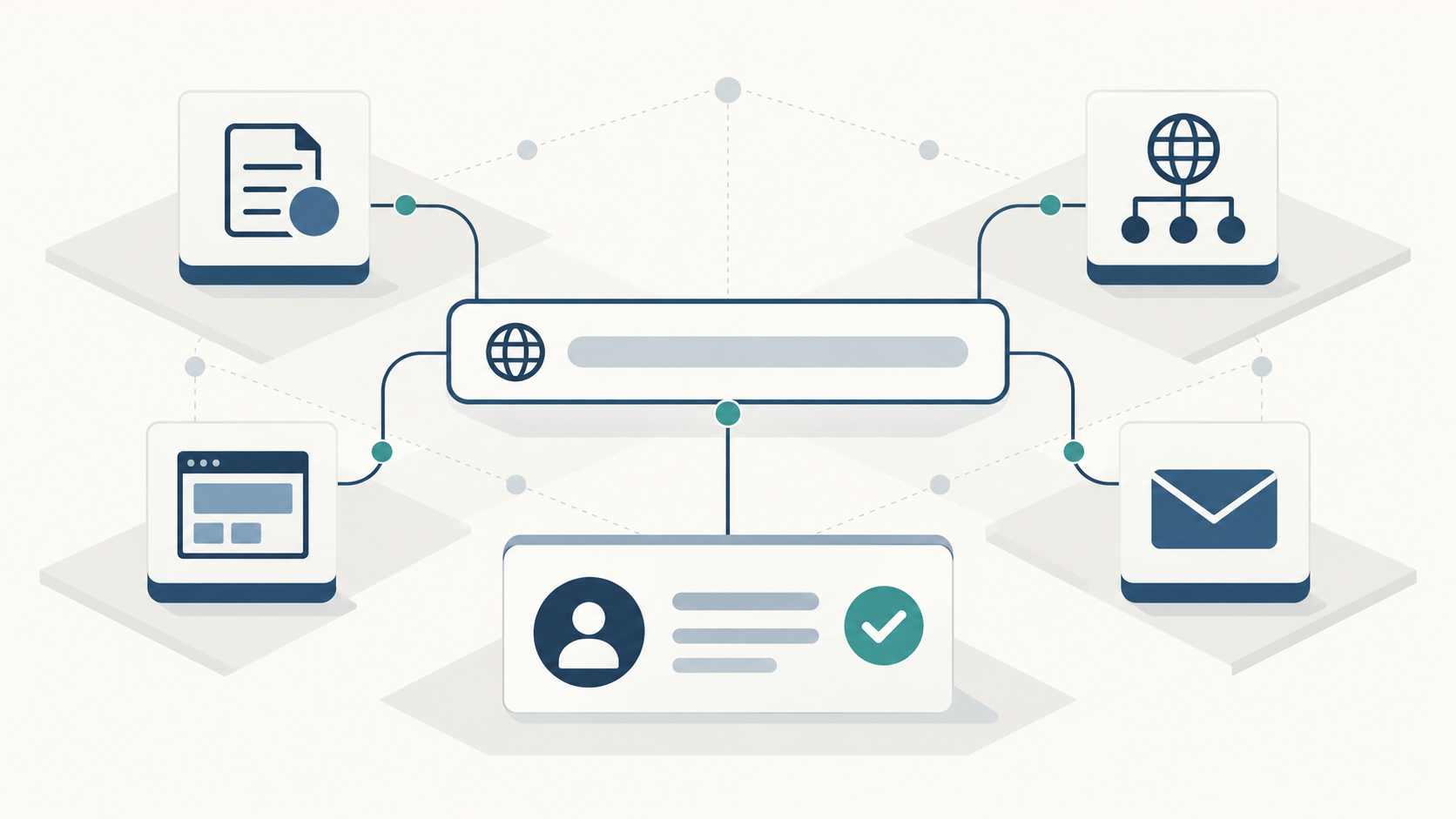
The business represented by a domain should normally control its registration. A website provider can manage the technical settings without being the registered holder or keeping the only login.
In practical terms, the company should know which registrar holds the domain, have durable access to that account, receive renewal and security notices, and be able to authorize changes. This is about continuity and clear responsibility. It does not suggest that an agency, employee or previous provider has acted improperly.
What does controlling a domain name mean?
A domain is registered through a registrar under a registration agreement. The registrant is the person or organization named in that agreement. For common generic domains such as .com or .org, ICANN describes the registrant as the individual or entity that registers the name and manages it through the registrar.
A domain registration is a contractual right governed by the registrar's terms and the applicable registry rules. It is not the same as owning an ordinary physical asset. Country-code domains may also have rules set by their national registry rather than the full ICANN framework.
For a business domain, control normally means that:
- the business, or the appropriate person within it, is recorded as the registrant;
- the business can sign in to the registrar account;
- contact and recovery details remain usable when staff or providers change;
- renewal notices and payments do not depend on one outside person;
- the business can approve a transfer or appoint somebody to manage the domain.
Public registration records may hide personal or organizational details for privacy reasons. A private lookup result does not by itself show who controls the account. The registrar record and account access are the important checks.
Is the domain the same as the website, hosting or email?
No. These parts work together, but they are separate:
- Domain registration keeps the name registered.
- DNS directs that name to the services it should use.
- Website hosting stores and serves the website.
- Email hosting receives and sends mail for addresses using the domain.
- Website software and content determine what the site contains and how it works.
Changing a website host does not necessarily require transferring the domain to another registrar. A provider may only need permission to update the relevant DNS records. Likewise, transferring the domain registration does not automatically move the website or email.
This separation matters when planning any change. An unplanned DNS edit can affect the website, email or other services using the domain, even when the intended change concerns only one of them.
Can a website provider manage the domain without controlling the account?
Yes. Many registrars support additional users, delegated access or role-based permissions. Where those options exist, a provider can receive the access needed to manage DNS or registration settings while the business keeps the main account and recovery controls.
If delegation is unavailable, the business and provider can agree another documented arrangement. The important point is that technical convenience should not leave the company unable to identify the registrar, renew the name or recover access.
Security matters here as well. The UK's National Cyber Security Centre recommends that registrars make protections such as multi-factor authentication and controls for sensitive changes available to customers. Use the strongest practical protection offered by the registrar, especially for the primary business domain.
What should your business check?
- Registrar: Which company currently provides the registration?
- Registrant: Is the business or intended holder recorded correctly?
- Account access: Can an authorized person inside the business sign in?
- Contact details: Are the registration and recovery details current? ICANN requires accurate registration data for domains covered by its policies.
- Renewal: Who receives expiry notices, and how is renewal paid?
- Security: Is multi-factor authentication enabled, and who can approve sensitive changes?
- DNS: Who operates it, and is there a current record of the settings?
- Transfer access: Can the registrant obtain the authorization code if a registrar transfer becomes necessary? ICANN explains the transfer process and common restrictions.
- Internal continuity: Does at least one other authorized person know where the records and recovery instructions are kept?
Do not request DNS changes or a transfer merely to test access. First record the existing setup and identify what depends on it.
What if an agency or former employee registered the domain?
Start with facts. Find the registrar, locate invoices and agreements, identify the account used for renewal, and ask who is recorded as the registrant. The arrangement may be deliberate, may reflect an older working method, or may simply need updating.
If control needs to change, plan it with the current provider and the registrar. Some registrant changes or recent registrations can temporarily restrict transfers. Contractual questions, reseller arrangements and country-code domain rules may also need individual review.
Before changing anything, preserve the current DNS records and confirm where the website, email and other services are hosted. Moving account control should not accidentally interrupt the services attached to the domain.
How do we handle domains at LINK-V?
We separate business control from technical administration. The client should have a clear record of the domain, the registrar and the access arrangement. We can manage the settings needed for a website while keeping responsibilities and exit paths documented.
If access is already divided between a former employee, agency, reseller and hosting company, we begin by mapping what exists. Our developer takeover work covers domains, hosting, DNS, code, accounts and other practical dependencies before larger changes are made. When systems also need to move, we treat the work as a planned migration rather than a quick account switch.
A domain may be only one line on an invoice, but it is the name through which customers reach the website and often the company's email. The business should know where that name is registered and retain a reliable way to control it.