
Your AI Agent Knows Your Passwords. Where Do They Go?
AI agents are useful. You give one a task and it goes off and does it, reading your files, logging into your accounts, handling things while you do something else.
To do that, it needs access. Your email password. Your account logins. API keys. And to actually work, it needs to see your data. Contracts, client details, addresses, the NDA you are bound by, the things you would never post in public.
The question almost nobody asks is simple. Where does all of that go?
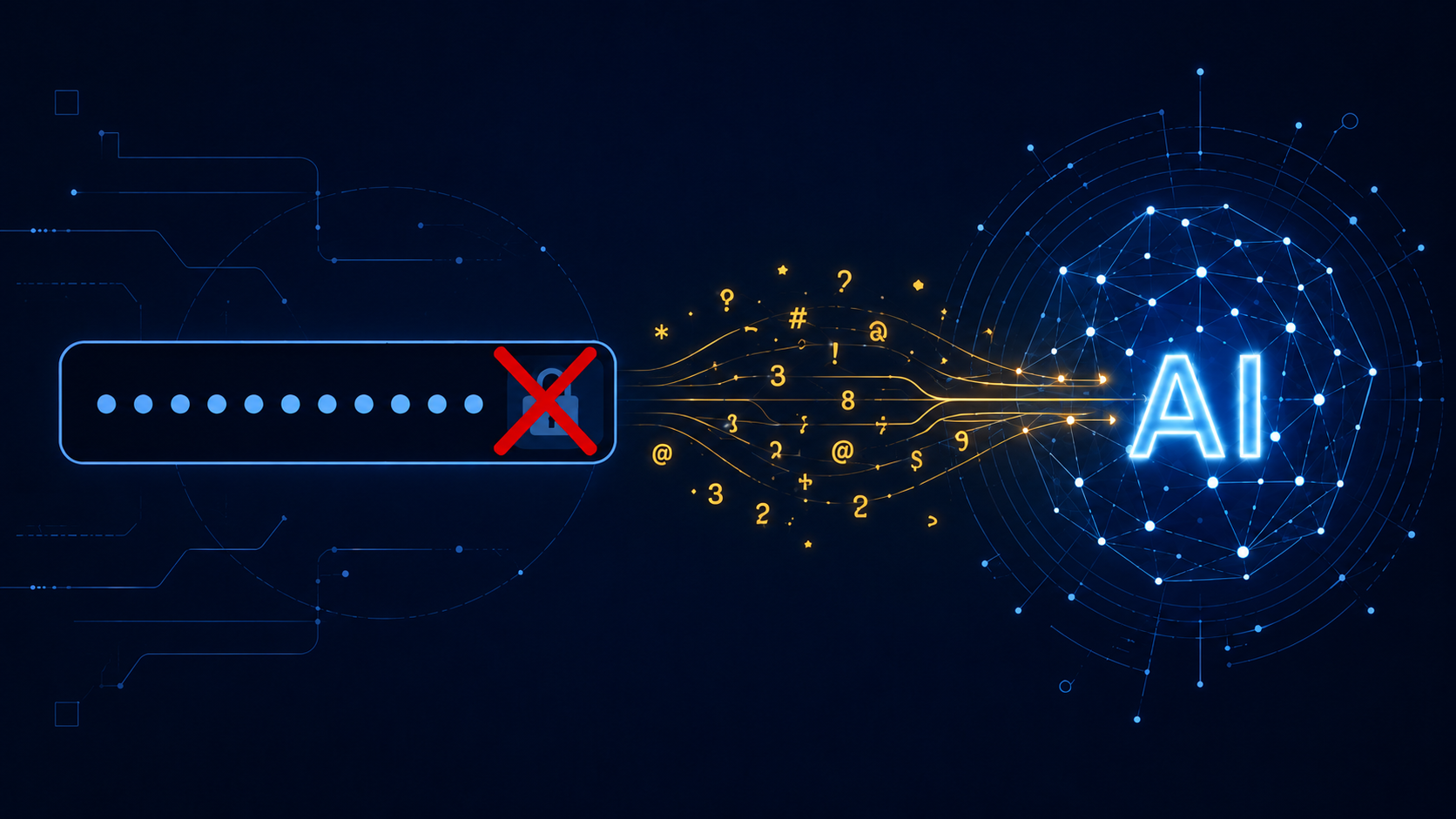
Straight Into The Model
Most AI agents take whatever they need and feed it into the language model. That is how they work. The model reads the task, the files, the context, and yes, often the credentials too.
That means your password does not stay on your computer. It travels across the internet to a model provider, sits in their systems, and passes through who knows how many servers on the way. The same goes for the contract you uploaded, the client list, the confidential document, the home address in that email.
You typed it once. Now it lives somewhere you cannot see, under terms that change every month, on infrastructure you do not control.
"Deleted" Does Not Mean Deleted
People assume that once a task is done, the data is gone. It is not. You just don't see it anymore.
Providers keep logs. Conversations with AI get retained for safety review, abuse detection, sometimes training, and even real people read them. "We do not train on your data" often has an asterisk, and even when it is true, the data still passed through and was stored along the way. You have no real way to confirm what was kept or for how long.
For a casual question, that is OK. For a password, a signed NDA, a client's personal details, that is dangerous territory. Information you are legally responsible for protecting does not belong in a black box you cannot audit.
Our "delete" means the data is wiped. Common email providers do not delete the emails you think you deleted. Check out Grace Mail - your data belongs to you, you decide.
The NDA You Just Broke
This is the part that catches people. If you are under an NDA, or you hold client data under GDPR, feeding that into a third-party model may be a breach on its own - you handed protected information to a party that was never authorized to receive it. And then the system gets hacked and all the information is out.
Most people doing this have no idea they are doing it. The agent made it easy, and social pressure makes you feel like you are doing it wrong if you do not put everything in.
There Is A Careful Way To Do This
An agent does not have to work like this. It can do the job without scattering your secrets across the internet.
An agent is a fancy name for deterministic software, the kind of programs and apps that were always here, and it does only what it is told to.
Your passwords and keys can stay in one secure place that the agent uses without the language model ever seeing them. The agent logs in, acts on your behalf, gets the work done, and the secret itself never travels to the model. Your data stays encrypted, deliberate about what actually needs to leave your machine and what does not. And your work never becomes training data.
This is the whole reason we built Grace AI the way we did. The agent runs on our own stack, top to bottom, with a Vault that holds your secrets so the model can act through them without reading them. Your data is yours. It does not wander.
Most AI agents hand your passwords straight to the model. Grace AI keeps them in Vault, where the agent can use a secret without ever seeing it.
You get an agent that does real work without being reckless with the things you are responsible for protecting.
RSA encryption, hard boundaries, and the Vault are more important than ever in the AI age.
Grace AI is opening early access soon. Join the wishlist and you will be first in line.